The Bug League
Photograph real bugs and turn them into cards you can collect and battle.
Carrying forward the idea that was first birthed with 
Some friends and I had a group chat where we posted pictures of spiders we came across. An unfamiliar spider on the back porch, a weird-looking one on the sidewalk, a tiny jumping spider hitching a ride on an Uber’s antenna. The photos became an inside joke, everyone sharing whatever little weirdo they’d found that day.
We started using AI to simulate battles between the spiders to see who had found the most dangerous one. That became The Spider League, a Discord bot that simulated and refereed the matchups. Eventually, the idea expanded beyond spiders and grew into The Bug League.
Find a bug. Take a photo. Discover what you captured. Battle your bug.
How a photo becomes a card
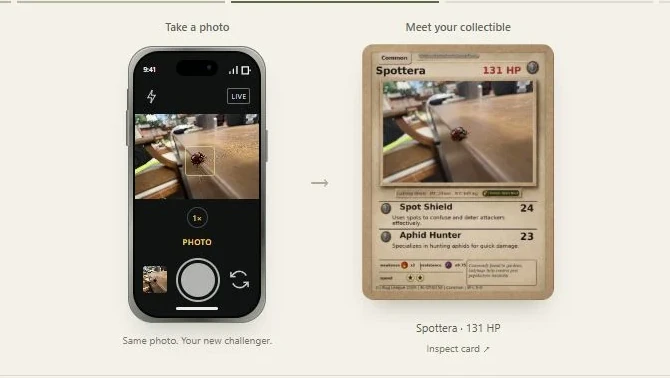
The game uses AI to identify the bug in a submitted photo, then checks a shared catalog for its artwork and card content. Backup models handle identification if the primary model is unavailable.
For a species already in the catalog, identification is the only AI step. The game reuses its existing artwork and content, while code handles the individual card’s stats, rarity, and finishes. The player’s original photograph stays on the card, so each discovery has its own record even when the underlying species content is shared.
If the species is missing, the game generates its artwork and shared card content, then saves them for future discoveries. Finding another ant of the same species doesn’t require generating its illustration and description again.
Keeping everyday captures inexpensive
Initially, every submission triggered new artwork, card content, and stat generation. As more people played, repeating that process became expensive. Moving to a shared catalog meant that the cost of generating an entry could be spread across every subsequent capture that reused it.
Background jobs also prepare missing content for the 100 most common bugs in a player’s region. This targets the species people are most likely to encounter before they submit a photo.
Preparation is regional, so the catalog can cover common local bugs wherever someone is playing. As new regions and species are added, that content becomes available to other players too.
The aim is for everyday discoveries to have their artwork and content ready in advance. Those captures only incur the AI cost of identification; catalog lookups and game logic handle the rest.
Reworking the battles
The first battle system used real-world traits to estimate which bug would win a physical encounter. Some bugs consistently won, and players found the system too basic. Finding a bug that was likely to lose didn’t give them much reason to submit it.
We tried adding arenas and environments so different bugs would have an advantage in different settings. That added variety, but players said the results felt too random.
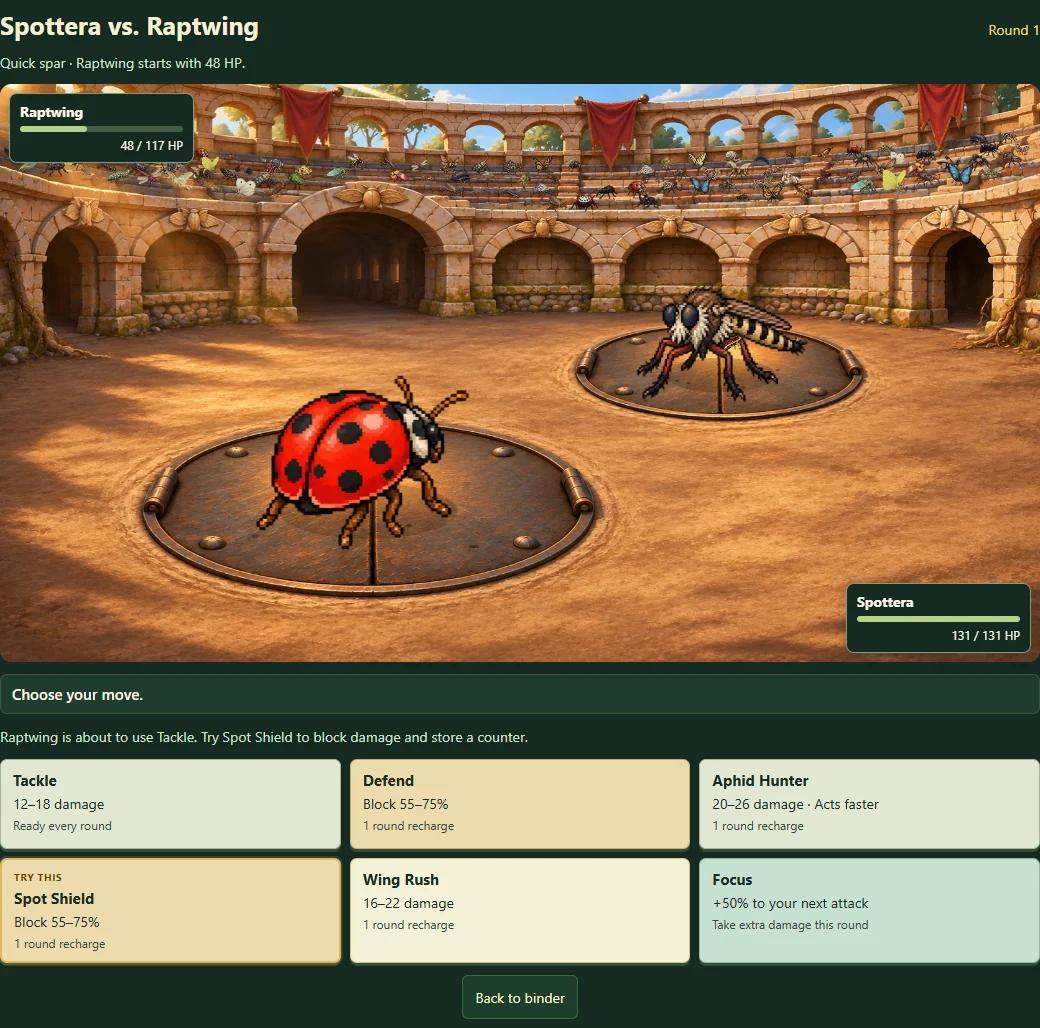
I then moved toward an arcade-style system. Stats roll within defined ranges, and bugs have environment types, abilities, weaknesses, and resistances. The aim is to give more bugs a useful role while keeping their abilities grounded in biology and making matchups easier to understand.
This version caught on with players and helped guide the updates that followed.
Collecting cards
Players also enjoyed the collection side, which led to more work on card presentation, regional capture rarity, and card variants. An encounter’s rarity can depend on where the bug was found, the player’s location, and the species’ seasonality.
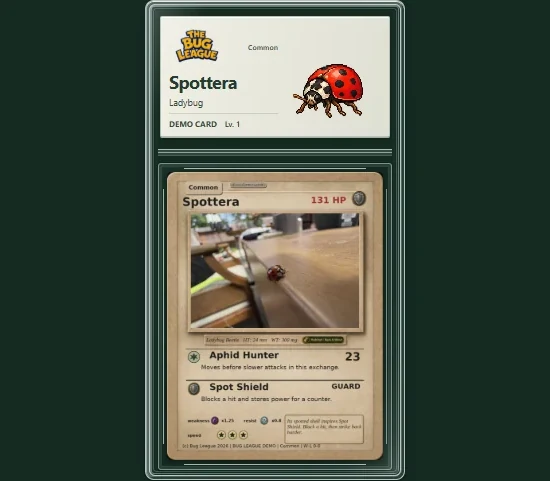
Each card keeps the original photograph and adds generated artwork. The bug’s biology inspires its traits, while game rules determine the limits on its stats. Holographic finishes roll separately from rarity.