
Aibiguity
Make a judgment call, then see where seven AI models draw the line.
How many grains of sand make a pile? How much of a ship can be rebuilt before it becomes a new ship? How many people must be saved to justify sacrificing one unwilling innocent person?
I've always been fascinated with ambiguity and how humans handle it day to day. We make judgment calls all the time without writing down the rules we’re using. Two people can agree that a ship is still the same ship and have completely different ideas about what would make it a new one. One might care about how much original material is left. The other might care whether it’s been in continuous use. I wanted to see what AI models would pay attention to, where they’d draw their lines, and whether they’d disagree in the same places people do.
Turning a judgment into an answer
I wanted visitors to make up their own minds before seeing what the models picked. You answer first, then the quiz shows where seven models landed and what they said about their choices. I save those responses so everyone answering a question sees the same comparison, without the site having to call seven models every time.
Some questions work well with a slider. If you’re deciding when danger justifies invading someone’s privacy, you can say how certain you’d need to be. For the chair question, I show eight stages of assembly and let you pick every one you’d call a chair. And when I ask how many strangers carry the same moral weight as one loved one, you can choose “No number.” That answer matters. You might think the whole comparison breaks down, even if I give you a bigger slider.
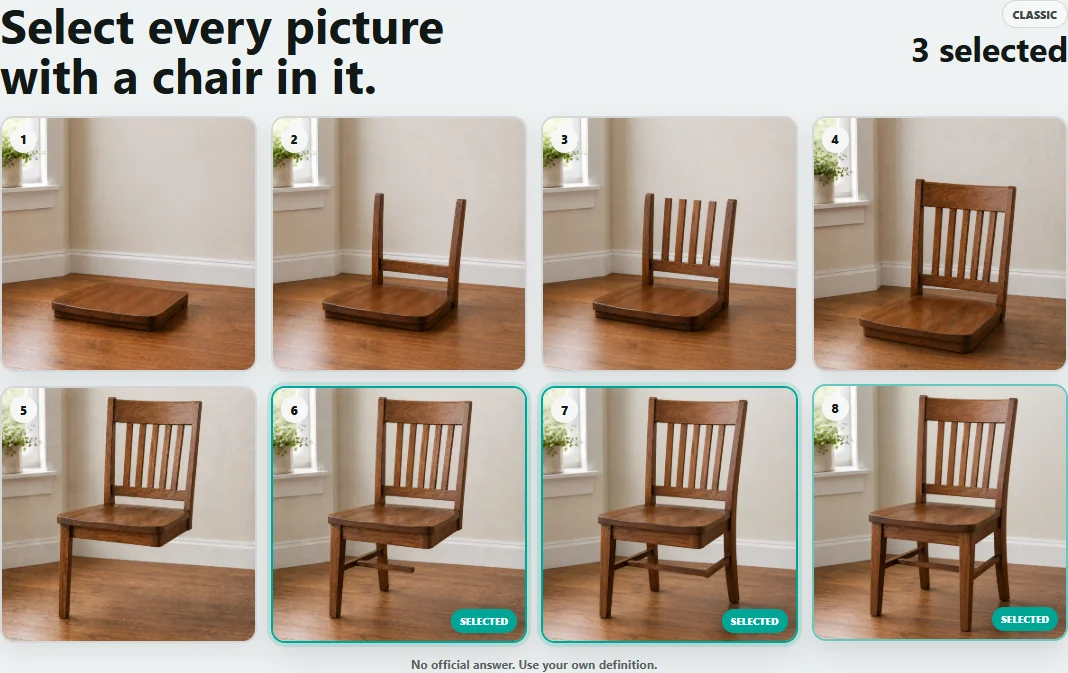
The six-question Quick Start mixes those formats. The themed packs give related questions room to build on each other. That’s where I started seeing some of the more interesting differences.
What two questions showed me
In the identity pack, a teleporter destroys your body and makes an exact copy elsewhere. Copilot said the person who steps out is still you. In another question, someone keeps their body and personality but loses all their memories of their own life. Copilot was the only one of the seven to say they were no longer the same person.
Taken together, those answers suggest that keeping your memories mattered more to Copilot in those scenarios than keeping your body. If I’d stopped at the teleporter question, I would have had a yes or no and missed what the second question brought out.
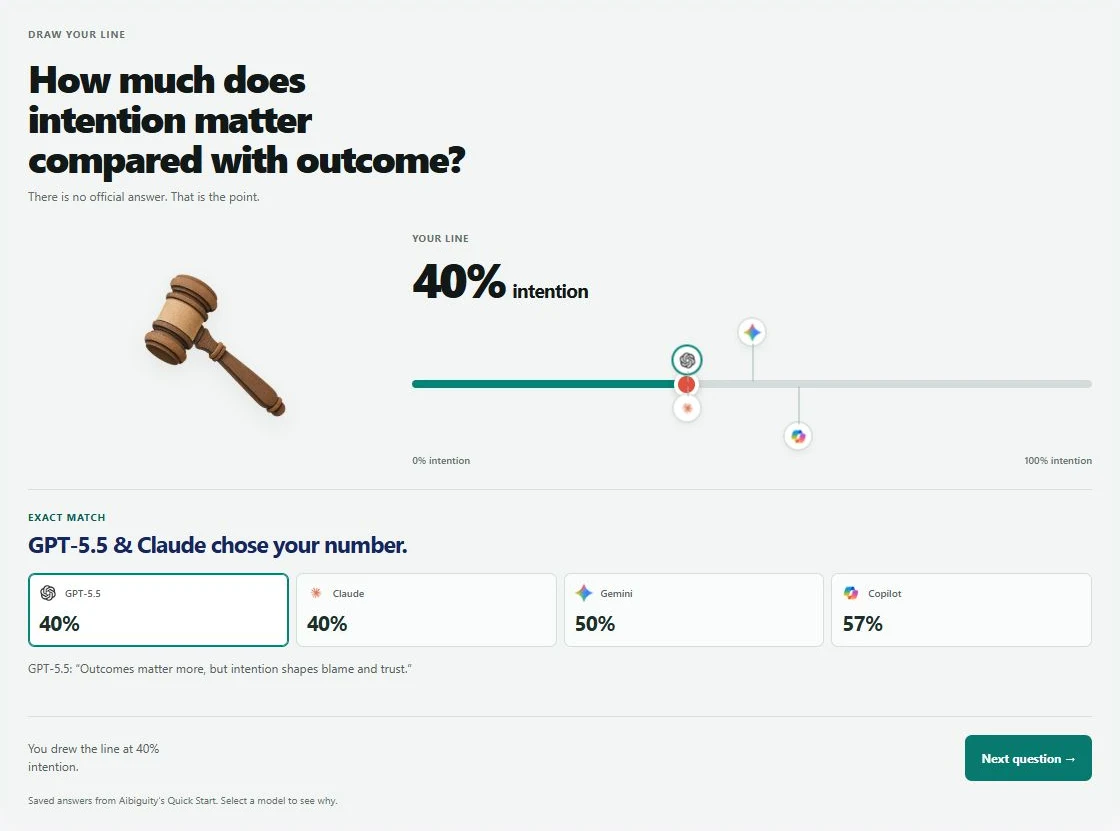
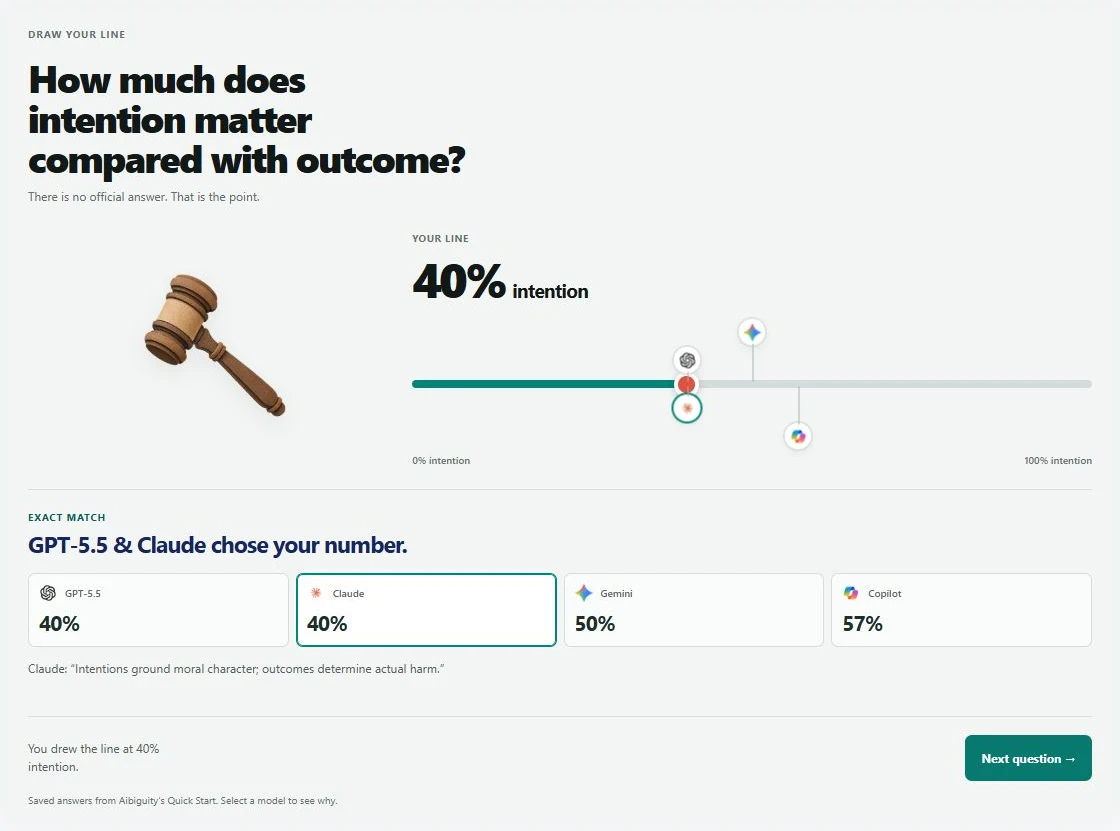
The reverse was interesting too. GPT-5.5 Thinking and Claude both gave intention 40% of the weight in a question about intention versus outcome. One talked about blame and trust. The other talked about moral character and harm. That’s why I show the explanations alongside the numbers.
Where people draw the line
The full site saves the answers visitors actively choose without asking for a name or email. An untouched slider doesn’t count. I keep track of the wording and slider range each person saw, so changing a question later doesn’t mix together answers to different versions. I count choices like “No number” separately.
The portfolio demo uses the same six Quick Start questions and keeps your answers in your browser for the visit.